React父子组件生命周期执行顺序
首次加载:
parent-constructor=>parent-getDerivedStateFromProps=>parent-render=>child-constructor=>child-getDerivedStateFromProps=>child-render=>child-componentDidMount=>parent-componentDidMount更新组件:
parent-getDerivedStateFromProps=>parent-shouldComponentUpdate=>parent-render=>child-getDerivedStateFromProps=>child-shouldComponentUpdate=>child-render=>child-componentDidUpdate=>parent-componentDidUpdate销毁组件:
parent-componentWillUnmount=>child-componentWillUnmount
生命周期详情:
挂载:
constructor()、static getDerivedStateFromProps()、render()、componentDidMount()更新:
static getDerivedStateFromProps()、shouldComponentUpdate()、render()、getSnapshotBeforeUpdate()、componentDidUpdate()错误处理:
static getDerivedStateFromError()、componentDidCatch()卸载:
componentWillUnmount()
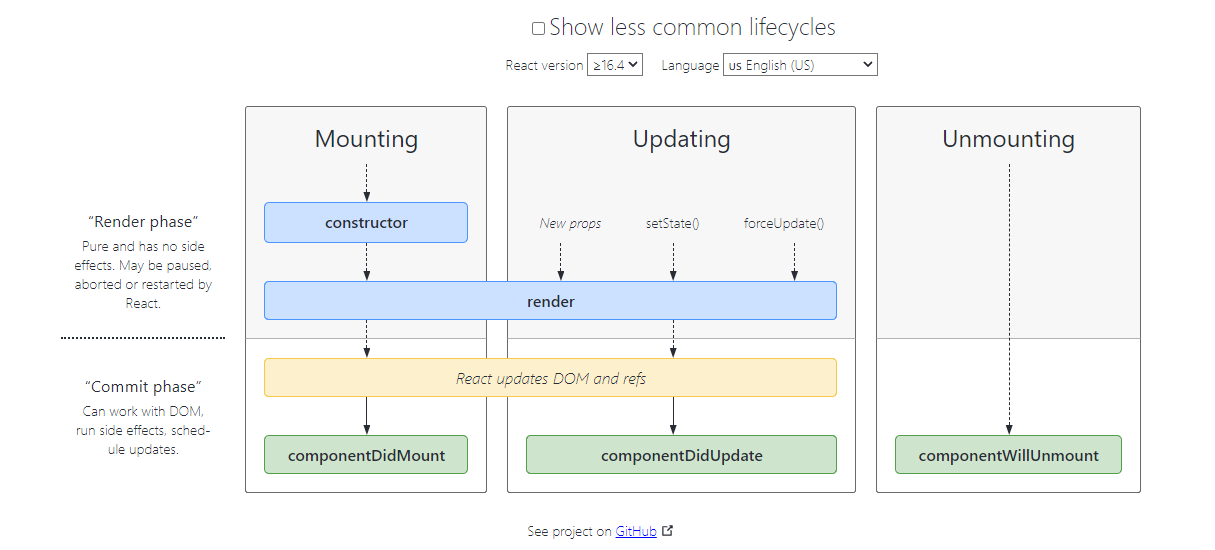
各个函数用途:
constructor():组件构造函数,在组件挂载之前调用;仅用于初始化内部state以及为事件处理函数绑定实例;static getDerivedStateFromProps():会在调用 render 方法之前调用,并且在初始挂载及后续更新时都会被调用,此方法适用于state 的值在任何时候都取决于 props;render():是 class 组件中唯一必须实现的方法;componentDidMount():会在组件挂载后(插入 DOM 树中)立即调用;shouldComponentUpdate():根据该函数的返回值,来确定组件是否重新渲染;getSnapshotBeforeUpdate():在最近一次渲染输出(提交到 DOM 节点)之前调用;此生命周期方法的任何返回值将作为参数传递给componentDidUpdate();componentDidUpdate():会在更新后会被立即调用,首次渲染不会执行此方法;componentWillUnmount():会在组件卸载及销毁之前直接调用;static getDerivedStateFromError():此生命周期会在后代组件抛出错误后被调用。 它将抛出的错误作为参数,并返回一个值以更新 state;它会在渲染阶段调用,因此不允许出现副作用componentDidCatch():此生命周期在后代组件抛出错误后被调用,会在“提交”阶段被调用,因此允许执行副作用。